Bitcoin Faces a Decisive Weekly Close
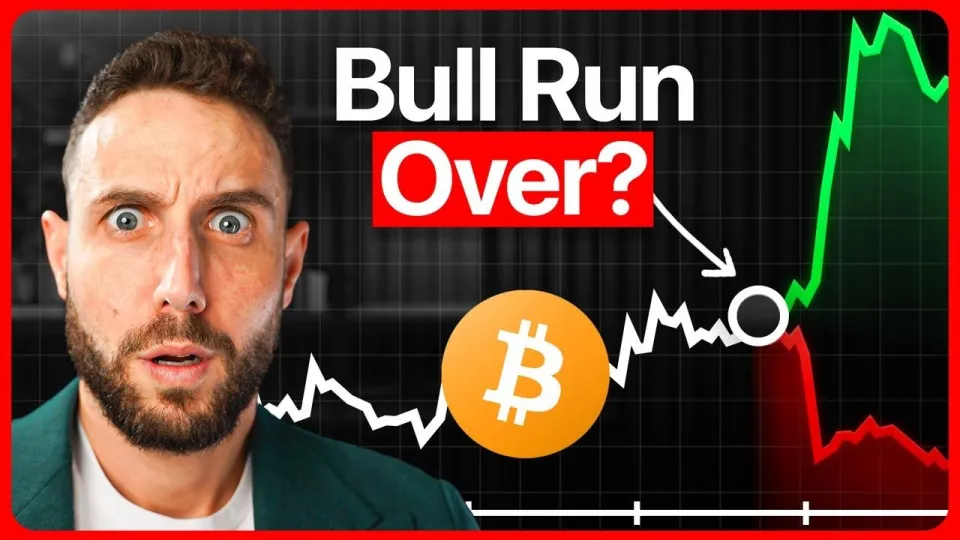
Video: Bitcoin Has 2 DAYS to Save the Crypto Bull Run
Want articles like this for your own video to promote it on YouTube and Google? Order them through the Telegram bot @sat_sit_bot. Articles with your video embedded are written and posted by the bot itself — on popular topical sites (no ads). Your first 50 articles are free.
Key takeaways
- The weekly close is the single trigger: holding support keeps the crypto bull run intact, losing it flips the bias bearish.
- EllioTrades frames the setup as a two-day window, so the close matters more than any intraday candle.
- Bitcoin dominance rising is the main risk for altcoins: lower lows across most alts is the bearish scenario.
- A short, shallow correction is what bulls want; a deep flush lowers the odds of a strong next leg.
- MSCI's decision on digital asset treasury companies such as MSTR is a separate macro catalyst traders are tracking.
Bitcoin has roughly two days to hold its key weekly support, and that single close decides whether the crypto bull run continues or flips into a deeper correction. If buyers defend the level into the weekly candle, the base case stays constructive: BTC ranges, altcoins rotate, and the uptrend survives. If the close comes in below it, the bias shifts to lower lows across most of the market. Traders who want to position around the outcome can use the Kalshi market linked by EllioTrades to express a view on what happens next.
What the two-day deadline actually means for bitcoin
The deadline is not a magic countdown; it is the weekly candle close, and it matters because weekly structure is what larger funds and systematic traders use to define trend. A daily wick below support can be forgiven. A weekly close below it cannot, because it confirms that sellers controlled the entire week rather than one session.
That is why the framing is binary rather than gradual:
- Support holds into the close. The prior range stays valid, the higher-timeframe uptrend is intact, and dips become accumulation zones rather than breakdowns.
- Support fails on the close. The market prints a lower high and a lower low on the weekly, momentum shifts down, and the burden of proof moves to the bulls.
- Chop right at the level. The worst outcome for both sides: no confirmation, no invalidation, and a market that keeps liquidating leverage in both directions.
The practical takeaway for anyone trading bitcoin is to size positions for the close, not for the next hourly candle. Leverage into a weekly close is how accounts get destroyed by a single wick that resolves minutes later.
Key bitcoin levels and the trading plan around them
The plan is built on reaction, not prediction: define the level, define what happens above and below it, and let the close pick the scenario. Three zones matter.
- The support zone. This is the line in the sand. Holding it on a weekly basis keeps the bullish structure alive and keeps altcoin exposure justified.
- The reclaim level. If bitcoin loses support intraweek and then reclaims it before the close, the breakdown is a fakeout and the setup improves, because shorts get trapped.
- The upside target. A strong close opens the path back toward the prior highs and, in the more optimistic scenario, a push toward the 100K region that traders keep referencing as the next psychological magnet.
What matters more than the exact numbers is the sequence: hold, reclaim, or lose. Each one implies a different position size, a different stop placement, and a different appetite for altcoins. A trader who wants to buy the dip needs to define in advance what a "buying opportunity" means, because a 5% pullback and a 25% flush are completely different trades.
Why bitcoin dominance is the real altcoin risk
The most underrated variable in this setup is bitcoin dominance, not the bitcoin price itself. When BTC drops, capital does not automatically rotate into altcoins; in the risk-off version, it rotates into cash and stablecoins, and alts fall harder than bitcoin.
That is the bearish scenario traders keep flagging: bitcoin dominance grinding higher while most altcoins print lower lows. In that world, buying altcoins because "they are cheap" is a losing strategy, because cheap assets in a downtrend get cheaper. The bullish version is the opposite: dominance tops out, BTC holds its range, and capital starts hunting for beta in large caps first, then mid caps.
The rotation order usually looks like this:
- Bitcoin holds support and volatility compresses.
- Large-cap altcoins reclaim their ranges.
- Mid and small caps follow, often weeks later and with much sharper drawdowns.
Anyone adding altcoin exposure before step one is confirmed is front-running the confirmation, which is fine only with small size and hard stops.
The counterarguments traders are raising
A weekly close setup invites strong opinions, and several of them are worth taking seriously rather than dismissing.
The first is that a very short bear market would produce a weak next bull run. That is a legitimate structural point: long, painful bear phases reset positioning and flush weak hands, while quick V-shaped recoveries leave overhead supply intact. If the correction is shallow, the next leg may be choppier and less explosive than the 2020–2021 cycle.
The second is that one retracement flipped sentiment from euphoric to bearish almost instantly. That is itself information: sentiment that fragile usually means positioning was crowded, and crowded positioning gets cleaned out regardless of the longer-term trend.
The third is a market-microstructure objection: weekend liquidity is thin, market makers step back, and retail flow alone rarely rescues a level. That is a fair caution, and it is the reason a Sunday or Monday close deserves more weight than a Saturday wick.
The fourth is the macro overlay. A regulatory or index decision on digital asset treasury companies, such as MSCI's review of firms like MSTR in global indexes, can move bitcoin more than any chart pattern. A chart level tells you where liquidity sits; a macro headline tells you who is forced to sell.
How to position without predicting the outcome
Discipline beats conviction when the setup is binary. A workable framework:
- Predefine invalidation. Decide before the close what price proves you wrong, and place the stop there, not at a round number that feels comfortable.
- Scale, don't lump. Enter in tranches: a starter position if support holds intraweek, an add on a confirmed weekly close, and nothing if the close is ambiguous.
- Keep leverage low into the close. Weekly candles produce wicks that liquidate tight stops in both directions.
- Separate bitcoin from altcoins. BTC can hold support while alts bleed; treat them as two decisions, not one.
- Watch dominance and the macro calendar. A rising dominance chart is a signal to reduce beta, not add it.
For traders who prefer event contracts over spot exposure, the same logic applies: the question is not "is bitcoin bullish" but "will this specific condition be true by this specific date."
Tools and links referenced in the breakdown
- Kalshi market for the bitcoin outcome: event contracts on what happens next, with the promotional offer for new users.
- Liquid trading with a 10% fee discount: derivatives access for executing the plan.
- WEEX deposit bonus up to $4,000: a $100 deposit unlocks tiered bonuses.
- EllioTrades on fomo: the public trading journal tracking these positions.
- EllioTrades on X: follow-up posts and level updates.
Conclusion
Bitcoin's weekly close is the decision point: hold support and the bull run keeps its structure, lose it and the market resets to a defensive posture with lower lows across altcoins. The plan is not to guess the outcome but to define both scenarios in advance, size accordingly, and let the candle confirm. Watch dominance as closely as price, respect the macro calendar, and keep leverage modest into the close. This breakdown comes from the EllioTrades video on the two-day window, and traders who want to act on the scenario can start with the Kalshi market.
Source: Bitcoin Has 2 DAYS to Save the Crypto Bull Run · Markdown version
Questions & answers
Does a single weekly close really decide whether the bull run continues?
A weekly close is the timeframe most larger funds use to define trend, so it carries more weight than any intraday move. Losing support on the weekly shifts the burden of proof to the bulls and often triggers systematic de-risking. That does not guarantee a bear market, but it changes the probability distribution for the next several weeks.
Should I buy altcoins now or wait for bitcoin to confirm support?
Waiting for confirmation is the lower-risk sequence: bitcoin holds, dominance stabilizes, then large caps reclaim their ranges before mid caps follow. Buying alts before step one is confirmed means front-running the setup, which only works with small size and hard stops. In a risk-off scenario, altcoins fall harder than bitcoin, not less.
What does a buying opportunity actually mean in this context?
It needs a defined price and a defined condition, not a feeling. A 5% dip to support that holds is a different trade from a 25% flush that breaks the weekly structure. Write down the level, the invalidation, and the position size before the close, otherwise every red candle looks like a discount.
How much should macro events like index decisions matter versus the chart?
A chart level shows where liquidity sits; a macro decision shows who is forced to buy or sell. Index reviews affecting digital asset treasury companies can move bitcoin more than any technical pattern, so the two should be read together. Treat the chart as the trigger and the macro calendar as the risk map.